
Commercial Solar & Storage Incentives, Province by Province
The 30% Clean Technology ITC and Class 43.1 immediate expensing apply the same way everywhere in Canada. What actually moves the payback math is your provincial utility rate structure — how demand, Global Adjustment, and delivery charges are billed. This page is the reference point; the mechanics behind each figure live on the linked pages below.
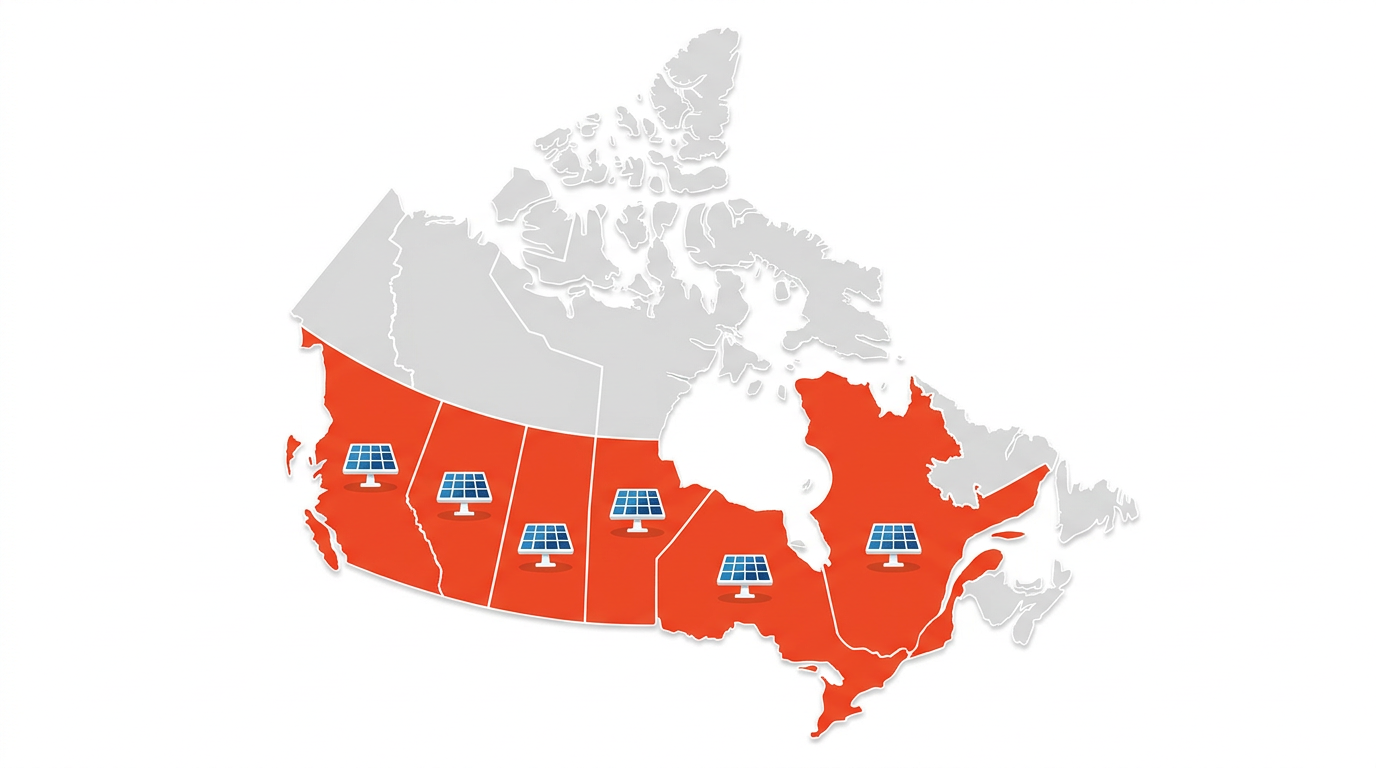
Every province stacks the same two federal mechanisms: a 30% refundable Clean Technology ITC under Bill C-59 (20% without the prevailing wage and apprenticeship election), and 100% first-year CCA under Class 43.1, reinstated by Bill C-15’s Productivity Super-Deduction for property available for use before 2030. Full mechanics: the 30% Clean Technology ITC and Class 43.1 / 43.2 depreciation.
Ontario — Global Adjustment
For Industrial Conservation Initiative (Class A) customers, Global Adjustment is billed in proportion to demand during the top five provincial peak hours of the year, and it can exceed 60% of a large facility’s total electricity bill. A battery that discharges through those predicted peaks re-prices the facility’s GA allocation for the following year. Solar reduces gross consumption; storage targets the specific hours that set the bill. See commercial energy storage for how GA-mitigation dispatch works.
Alberta — Deregulated Market, Demand-Charge Billing
Alberta’s deregulated market bills a substantial share of commercial and industrial delivery cost on peak demand (kW), frequently set by a single 15-minute interval in the month. A short load spike can set billed demand for the entire period. Storage clips those intervals, structurally lowering billed demand month after month, while solar offsets the underlying energy cost that floats with the wholesale pool price.
British Columbia
BC Hydro’s large-commercial and industrial rate classes are structured differently from Alberta’s deregulated pool market, with their own demand-billing mechanics and net-metering provisions for on-site generation. The right system size and dispatch strategy depends on your specific rate class and load profile — worth a utility tariff review before finalizing a design.
Nova Scotia, New Brunswick & PEI
Atlantic Canada is served by regulated utilities — Nova Scotia Power, NB Power, and Maritime Electric — each with its own commercial rate schedules and net-metering rules. Facility economics here are typically driven more by energy-charge offset than by the sharp demand-billing spikes seen in Ontario or Alberta, which changes the optimal solar-to-storage ratio for a given site.
Get the Numbers for Your Facility’s Province
Utility tariffs and rate classes vary by facility, not just by province. Bring your utility bills and we will map the specific incentive stack and storage dispatch strategy that applies to your site.
General information, not financial or tax advice. Utility rate structures, demand-charge mechanics, and net-metering rules change and vary by rate class within each province. Confirm current tariffs with your utility and current incentive eligibility with your advisors and the CRA.